Ozil goal AI: put your own photo into the goal
One photo goes in, the goal comes out with your face on it: you run onto the ball, lift it over the keeper, stand still while two defenders slide past, and roll it into the empty net. 10 seconds, vertical, ready to post. You see the opening frame with your face in it free before you pay. 5 videos for $9.99, one-off, no subscription.

1. Your photo → the free opening frame
One face, looking at the camera, in good light. A plain selfie works better than a group shot or a photo from far away.
What the clip actually shows
It is one sequence, always in this order. It is not a dribble, and there is no celebration in it:
- The run. You come onto a loose ball with the keeper already off his line.
- The chip. You lift it over him as he dives out.
- The touch. You take it on the bounce.
- The slide. You stop dead; two defenders slide past in front of you.
- The finish. You roll it into the empty net.
Described the same way by Hugging Face's write-up of the trend and by the first tools that shipped it, both read on 21 October 2026.
Real runs, not mock-ups
Three invented faces — generated for the test, because we won't put a real person on this page without asking them — each taken through the exact prompts this tool uses, on 21 October 2026. The step is judged on one thing: after the change of scene, is it still the same face? All three came back recognisable. The third one shows the limit: the face held, the glasses didn't. Expect accessories to be a coin toss, and check the free picture before you spend a credit.
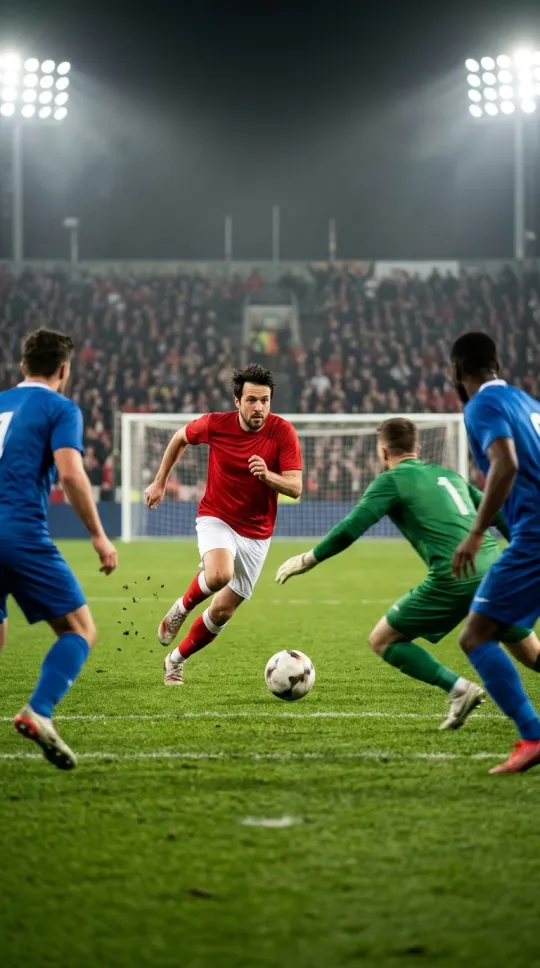
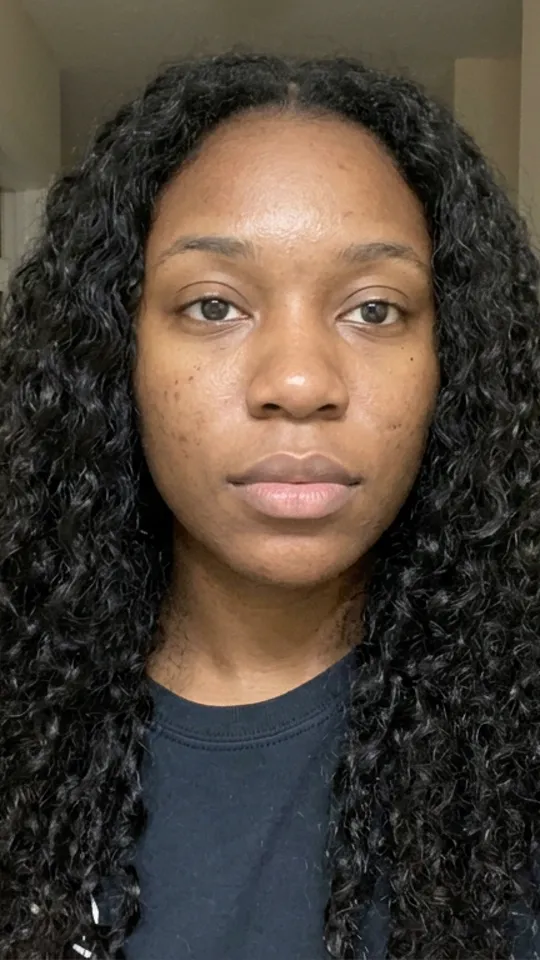
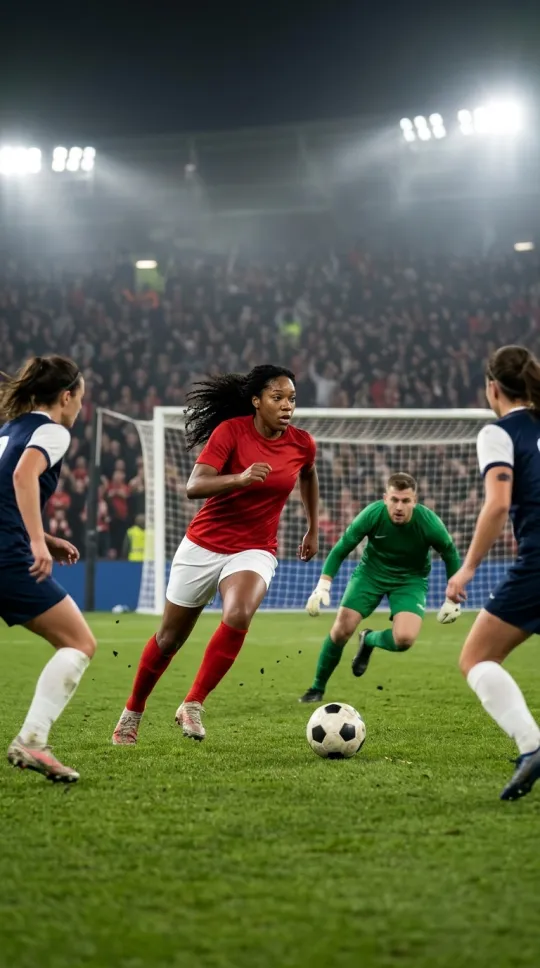

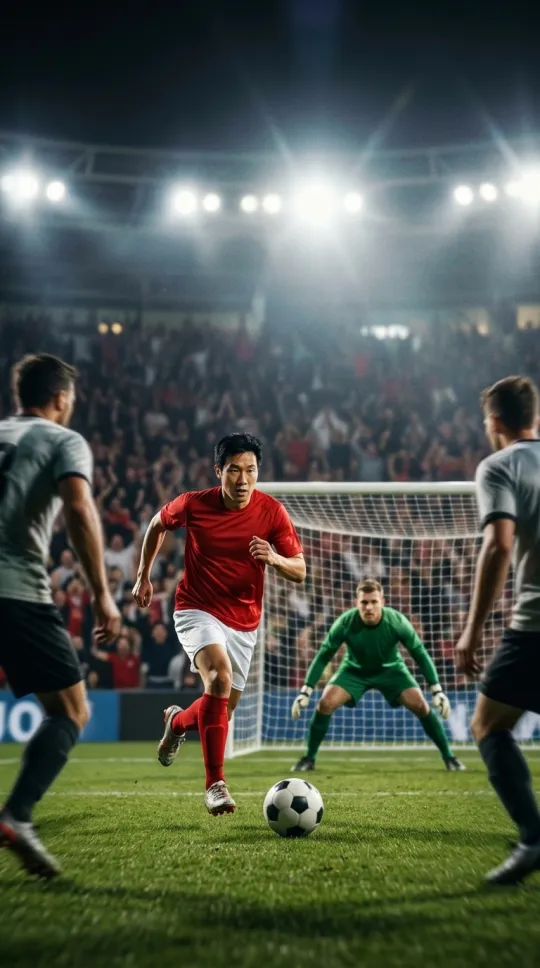
And the videos those frames became
Two of the three taken all the way through on the same day. Ten seconds each, 768×1376, no sound — exactly what you download.
How it works
A video model asked to put a face into a scene and act out a five-beat sequence at the same time loses the face. So the tool splits it, and lets you check the hard half for free:
- The opening frame. Google's Nano Banana 2.1 builds the first moment of the sequence around your face — you on the ball, keeper already rushing out, defenders closing — in 9:16, because that is the shape the clip is posted in. About 15 to 30 seconds. Free, 3 a day.
- The goal. MiniMax Hailuo 2.3 Fast, run by Runware, plays the sequence out from that frame with the camera staying on you: the chip, the bounce, the sliding defenders. About two minutes. One credit.
| Picture model | Nano Banana 2.1 on the Gemini API, 9:16; 15.3, 23.0 and 28.3 seconds for the three test faces on 21 October 2026, all three still recognisable (one lost its glasses) |
|---|---|
| Video model | MiniMax Hailuo 2.3 Fast on Runware, $0.32 a clip to us; 10 seconds at 768×1376, 24 fps, 127 seconds for each of the two clips above on 21 October 2026 |
| Why that model | Five others were run on the same opening frame and prompt on 21 October 2026. None kept the face on camera as well. See the table below |
| You download | MP4, vertical, no sound — add the trend's track in TikTok or Reels |
| Your price | Pictures free, 3 a day · 5 videos for $9.99 |
Model pages: Runware's model catalogue, Gemini API pricing. Both checked 21 October 2026.
Why this model, with the numbers
The clip is only worth anything if the face in it is yours, so that is what we measured. Same opening frame, same prompt, same day — 21 October 2026, one run each, prices as charged to us:
| Model | Cost · size | What it did |
|---|---|---|
| MiniMax Hailuo 2.3 Fast (used here) | $0.32 · 768×1376 | Keeps him centred and recognisable to the last frame |
| Kling 2.5 Turbo Pro | $0.70 · 1076×1924 | Sharpest picture, but turns him away and follows the ball; the face is gone by halfway |
| Kling 2.5 Turbo Standard | $0.42 · 716×1284 | Films his back for most of the clip, and never finishes |
| MiniMax Hailuo 2.3 (full) | $0.56 · 768×1376 | Cuts to the net for the finish and loses him |
| Seedance 1.0 Pro | $0.19 · 480×864 | Cheapest, lowest resolution, and ended with a player lying inside the goal |
| PixVerse V6 | $0.375 · 360×640 | Reaches the trend's full 15 seconds, but the ball never arrives |
Twice the price bought a worse clip. One line of the prompt does most of the work: telling the camera to follow him and never cut to the goal. Without it even the model we use drifts onto the ball.
What it still doesn't nail: the last beat. The ball reaching the net is the part these models are weakest at, so some clips end with him running past the post rather than on a clean finish. We would rather keep your face in frame than cut away to a net. Watch the two clips above before you buy — they are untouched.
What this does not do
Some tools for this trend cut your face into the original television pictures and keep the real commentary. We don't: the stadium, the crowd, the keeper and the defenders here are all generated, and the clip is silent. It looks like a broadcast; it isn't one. That is a deliberate choice — the footage and the audio of a real match belong to the people who filmed it.
It also won't make a video of somebody else. Upload your own face, or one you have permission for.
Where the trend came from
The clips started spreading in the middle of October 2026. Google Trends has searches for the phrase beginning on 16 October 2026 and peaking on 17 October 2026, with nothing measurable before that; our own radar picked the term up from two worldwide trend feeds on 20 October 2026.
Tips for a clip that looks right
- One face, filling a good part of the frame. Group photos confuse the picture step; it may keep the wrong person.
- Front-on beats profile. A face turned away gives the model less to hold on to, and it is the face that sells the clip.
- Even light. Harsh shadow across half a face often comes back as a different nose or jaw.
- Check the free picture first. That is what it is for: if the keeper isn't already rushing out, or it doesn't look like you, make another — only the video costs a credit.
- Sound. The clip is silent on purpose. Add the trend's track in TikTok or Reels when you post it.
Questions
What happens in the Ozil goal AI video?
One sequence, in this order: the player runs onto the ball, lifts it over the goalkeeper as he dives out, takes a touch as it bounces, stops dead while two defenders slide past, then rolls it into the empty net. It is shot vertical, 9:16, like a broadcast replay. There is no dribbling and no celebration in it.
How do I make one from my photo?
Upload one clear, front-on photo of a face. An image model first builds the opening frame of the sequence with that face in it, free, so you can check it still looks like you. Then a video model plays the sequence out into a 10-second vertical clip you download as MP4.
How much does it cost?
The opening picture is free, 3 a day. A video takes one credit from a pack: 5 videos for $9.99, paid once through Stripe (cards, Apple Pay, Google Pay). No subscription, and the credits don't expire. If a video fails, the credit goes back on your pack. After paying you get a code: keep it to use your pack on another device.
How long is the video, and what quality?
Ten seconds of MP4 at 768×1376 (vertical 9:16), 24 frames a second, about 3 MB, with no sound — measured on 21 October 2026, when the picture step took 15 to 28 seconds across three faces and the video step 127 seconds.
Does it use the real match footage?
No. The stadium, the crowd, the keeper and the defenders are all generated: a new night match that looks like a broadcast, not the original television pictures, and with no commentary or crowd audio. Nothing filmed by a broadcaster is used or re-cut.
Is this official, or connected to any footballer or club?
No. Glintmake is an independent site with no connection to any player, club, league or broadcaster, and none is implied. The tool puts your own face into a generic stadium. It does not use anyone else's likeness, name, kit or badge, and we won't make a video of someone else's face for you.
Can I use someone else's photo?
Only with their permission, and never to make it look like they did or said something they didn't. Photos of public figures, and anything meant to deceive, are not allowed under our Terms.
Which AI models does it use?
Google's Nano Banana 2.1 image model, through the Gemini API, builds the opening frame with your face in it, and MiniMax Hailuo 2.3 Fast, run by Runware, plays the sequence out into the video.
What happens to the photo I upload?
It goes to the image model to build the opening frame and isn't kept afterwards. That picture and the finished video are kept for 7 days so you can download them again. See our privacy page.